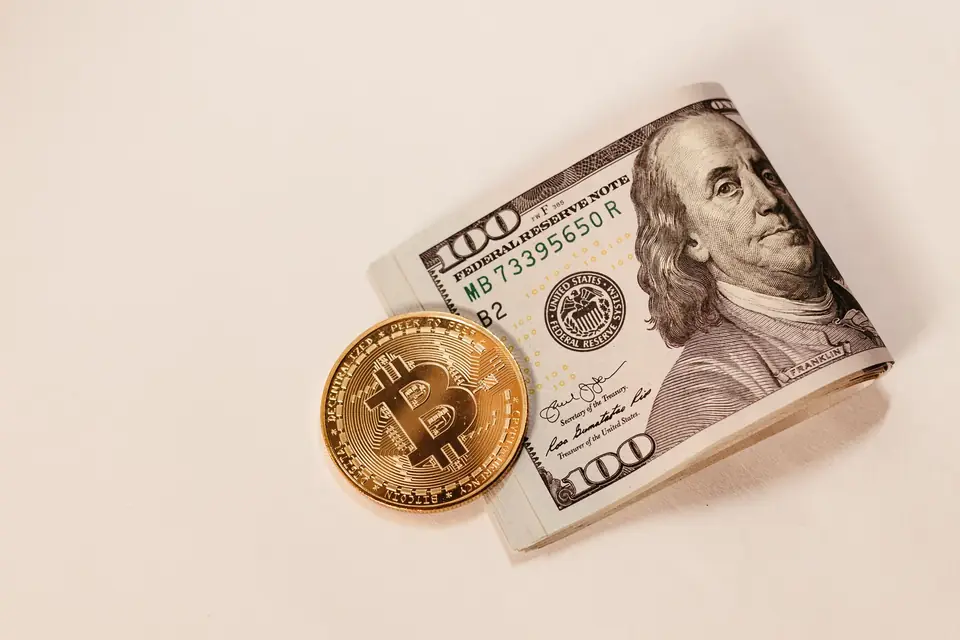
USDT is short for "USD Tether": a digital token that aims to stay worth one US dollar. It's a type of crypto called a stablecoin, so unlike Bitcoin its price isn't supposed to go up and down. In the Philippines, people use USDT to receive pay from foreign clients, to send and receive padala, and to keep some savings in dollar terms without opening a dollar account at the bank.
USDT meaning in plain words
Break the name down and the USDT meaning is pretty clear:
- USD: it's pegged to the US dollar.
- T: Tether, the company that issues it.
So 1 USDT ≈ $1, which in pesos means roughly whatever the dollar is trading at. If the dollar is at ₱63, your 100 USDT is worth about ₱6,300. Our USDT to PHP converter shows the live figure.
Think of USDT as a dollar that lives on a blockchain instead of in a bank. You can hold it in an app such as Coins.ph or GCash's GCrypto, or in your own wallet app, and send it to anyone in the world who has a compatible address. The transfer settles in seconds to minutes, any day of the week, including Sundays and holidays when banks are closed.
USDT first appeared in 2014 and has grown into the largest stablecoin by far: roughly $177 billion in circulation in November 2026, about 60% of all dollar stablecoins, and the third-biggest crypto asset after Bitcoin and Ether. Its daily trading volume is usually bigger than any other coin's, which is why exchange screens are full of pairs like BTC/USDT.
How USDT stays at one dollar
A stablecoin is only useful if it actually stays stable. Tether's approach has three parts:
- Reserves. For every USDT in circulation, Tether says it holds assets of at least equal value. Its attestation for 30 September 2026 showed about $191 billion in assets against $183 billion in liabilities, with roughly three-quarters in cash-like holdings such as US Treasury bills and repos. The rest includes gold, Bitcoin, secured loans and other investments.
- Minting and redeeming. Verified clients can deposit dollars with Tether to get new USDT, or hand USDT back for dollars. The minimum is $100,000, so in practice this is for big trading firms, not for someone in Quezon City with 200 USDT. Retail users exit by selling on an exchange or app.
- Arbitrage. If USDT drops to $0.99 on the market, traders can buy it cheap and redeem it at $1, which pushes the price back up. If it rises above $1, new tokens get minted and sold.
For ordinary users in Manila or Cebu, the result is simple: USDT almost always trades within a few tenths of a percent of $1. The chart below shows how close it has stayed over the last month.
USDT/USD price, last 30 days
LiveNote what Tether's reports are and aren't. The quarterly reports are attestations: a snapshot of assets and liabilities at one moment, checked by an accounting firm. In August 2026 Tether said KPMG had completed a first full audit of its 2025 financial statements, but the audited statements themselves weren't published. Tether also paid settlements to US regulators in 2021 over past claims about its reserves. None of this means USDT is about to fail; it means the trust is in a private company, not a government. That's one reason some people prefer to keep only part of their savings in any single stablecoin.
Has USDT ever lost its peg?
Briefly, yes. In 2017 and 2018, when Tether had banking troubles, USDT traded as low as about $0.85–0.89 on some exchanges. During the Terra collapse in May 2022 it dipped to around $0.94 on one major exchange, and holders redeemed billions of dollars over the following weeks; Tether says it paid every request at $1. Since 2024 the dips have been short wicks on single exchanges. Over the twelve months to November 2026, its daily average price stayed between about $0.998 and $1.003.
What Filipinos actually use USDT for
USDT isn't just a trader's tool here. The common real-world uses look like this:
- OFW remittances. Workers abroad buy USDT where they are and send it home, where family sells it for pesos. Some find this cheaper or faster than traditional padala on certain corridors; others don't. See our OFW remittance guide for a fair comparison.
- Freelancer and remote pay. Virtual assistants, developers and designers working for foreign clients sometimes get paid in USDT, especially when the client is in a country where sending dollars by bank is slow or costly.
- Dollar savings. When the peso weakens, a balance held in USDT keeps its dollar value. Measured against the dollar, the peso lost about a quarter of its value between the end of 2015 and November 2026, and with record lows during 2026 and inflation reaching 7.8% in October, more people started asking about this. Remember that USDT tracks the dollar, not Philippine prices: it protects you from peso weakness, not from rising prices in general.
- Online payments and gaming. Some international merchants and platforms accept USDT. Be careful here, because many "earn USDT" apps are scams.
- Trading. On exchanges, USDT is the base currency for buying other crypto.
USDT vs pesos, a dollar account and PHPC
People often ask how USDT compares with the other ways to hold money. Here's the short version:
| Pesos in GCash/bank | USD bank account | USDT | PHPC | |
|---|---|---|---|---|
| Value tracks | Peso | US dollar | US dollar | Peso |
| Deposit insurance | Bank deposits only (PDIC) | Yes (PDIC) | No | No |
| Send abroad | Slow/costly | Wire fees | Minutes, low fee | Limited |
| Open 24/7 | InstaPay, yes | No | Yes | Yes |
PHPC is a peso stablecoin issued by Coins.ph, which exited the BSP regulatory sandbox in 2025. It's useful for moving pesos on-chain, but it won't protect you from peso weakness, because it is a peso.
A USD savings account at a Philippine bank is still the more conservative way to hold dollars: it's insured and regulated as a deposit. USDT's advantages are speed, access from just a phone, and easy international transfers.
How much has the peso lost against the dollar?
Units of local currency per 1 USD
Year-end exchange rates, rounded. A dollar stablecoin tracks USD, not Philippine prices, and carries its own risks.
The networks USDT runs on
USDT doesn't live on just one blockchain. The same token exists on several networks, each with its own address format and fees:
- TRC20 (Tron): very common for transfers between exchanges and in P2P. Addresses start with T. Our USDT TRC20 guide explains it in detail.
- ERC20 (Ethereum): the original home for many crypto apps. Addresses start with 0x.
- BEP20 (BNB Chain): low fees, also 0x addresses.
- TON: the network behind Telegram's wallet. See USDT on TON.
- Solana, Polygon, Arbitrum and others.
The golden rule: the sender and the receiver must use the same network. Sending TRC20 USDT to an address that only accepts BEP20 can mean losing it. The networks and fees guide compares costs side by side.
USDT words you'll see in apps and group chats
A few terms come up again and again once you start using USDT:
- Stablecoin: a crypto token designed to hold a steady value, usually against the US dollar.
- Peg: the target value, here $1. "Holding the peg" means trading close to it.
- Network or chain: the blockchain the USDT moves on (TRC20, BEP20, TON and so on).
- Wallet address: the string of characters you share to receive USDT, like an account number. See our wallet address guide.
- Gas or network fee: the small cost of moving tokens on a blockchain, paid in that chain's own coin (TRX on Tron, ETH on Ethereum).
- Seed phrase: the 12 or 24 words that restore a self-custody wallet. Whoever has them controls the money.
- P2P: peer-to-peer trading, where you buy from or sell to another person while a platform holds the USDT in escrow.
- KYC: "know your customer" ID checks that licensed apps must run before you can trade.
Ready to hold digital dollars?
Buy USDT with a card or bank transfer on an established exchange with identity checks, then withdraw it to your own wallet on the network you need.
Operating since 2013 and registered with FinCEN (US) and the FCA (UK); readers in the Philippines are served by its international entity. Check availability and local rules before you sign up.
Is USDT legal in the Philippines?
Yes, buying, holding and selling USDT is legal for individuals. No Philippine law bans it. What the government regulates is the businesses that handle it:
- The BSP licenses Virtual Asset Service Providers, the apps that convert crypto to and from pesos.
- The SEC requires crypto-asset service providers that offer trading to Filipinos to register under its CASP rules, which took effect in 2025.
Two important limits: virtual currencies are not legal tender, so no one is obliged to accept USDT as payment; and regulators keep warning people to use licensed platforms only. The full picture is on our page about USDT's legal status in the Philippines.
The risks, without sugarcoating
USDT is stable in price, but it isn't risk-free:
- Issuer risk. Its value depends on Tether's reserves and on Tether honouring redemptions.
- Freezes. Tether can freeze USDT at specific addresses, usually at the request of law enforcement. Innocent users who received tainted funds can get caught up in this.
- Platform risk. If an app or exchange fails or gets blocked, your balance there can be stuck.
- User mistakes. Wrong network, wrong address, or a lost seed phrase usually means the money is gone for good.
- Scams. Fake investment schemes, task scams and fake P2P payments are the biggest losses Filipinos report. Read our USDT scams guide before you deal with strangers.
How to get your first USDT
If you've read this far and want to try it, start small:
- Choose a BSP-licensed app you already trust, for example Coins.ph, PDAX, Maya or GCash's GCrypto.
- Complete verification with a valid ID. GCrypto requires you to be 18+ and fully verified.
- Buy a small amount, say ₱500 to ₱1,000 worth, to learn how the screens work.
- Practise a withdrawal to your own wallet with a tiny test amount on the right network.
- Write down what you paid in pesos for your records.
Our step-by-step guide on how to buy USDT in the Philippines walks through each app, fees included.