A stablecoin is a cryptocurrency designed to keep a steady price, almost always one US dollar per token. It moves like crypto, in minutes, around the clock, from wallet to wallet, but it is meant to hold its value like cash. Most stablecoins do this by holding reserves of real dollars and short-term government debt; a few try to do it with other crypto or with code alone.
That last difference is the one that matters. The type of backing decides how a stablecoin behaves in a crisis, and whether "stable" survives a bad week. This guide explains the main types in plain language, walks through the Terra collapse that taught the industry its hardest lesson, and gives you a short checklist for judging any stablecoin, including USDT.
What is a stablecoin, in plain terms?
Imagine a company that takes your dollar, puts it in a safe, and hands you a digital token that says "redeemable for one dollar". You can pass that token to anyone with a crypto wallet, and as long as everyone believes the dollar is still in the safe, the token trades at about one dollar. That is a fiat-backed stablecoin, and it is how the two largest ones, USDT and USDC, work.
So a stablecoin is really two things at once:
- A token on a blockchain. It lives on networks such as Tron, Ethereum, Solana or TON, uses the same wallets and addresses as other crypto, and settles transfers in seconds or minutes.
- A promise about value. Something, whether reserves, collateral or an algorithm, is supposed to keep it at the target price. The quality of that promise is what separates a solid stablecoin from a dangerous one.
Most stablecoins target the US dollar because it is the currency the world trades in. A smaller group tracks other assets: gold (Tether's XAU₮, whose gold backing reached a record of about US$3.44 billion in late 2026), the euro, or local currencies such as the yen and the Philippine peso.
Why stablecoins exist
Crypto prices swing hard. Before stablecoins, a trader who wanted to step out of bitcoin had to withdraw to a bank, which could take days and was impossible on many offshore platforms. Stablecoins solved that: you could park value in a dollar token without leaving the crypto system.
That was the original use. Today the bigger story, especially in Asia, is everyday money movement:
- Trading. Most crypto pairs on global exchanges are priced in USDT.
- Cross-border payments. Chainalysis counted cross-border stablecoin transfers rising from about $124 billion to $220 billion in its 2026 study year, much of it in USDT. Migrant workers and freelancers use stablecoins to move money home; see USDT remittances.
- Dollar savings. Where the local currency has lost value, as in Türkiye, households hold dollar stablecoins as a savings tool.
- Peer-to-peer markets. Chainalysis found that 96% of domestic P2P crypto value is now stablecoins.
The main types of stablecoins
Every stablecoin answers one question: what stands behind the token? There are three main answers, plus a niche fourth.
| Type | What backs it | Examples | Main weak point |
|---|---|---|---|
| Fiat-backed | Cash, T-bills, repos held by a company | USDT, USDC, PYUSD | Trust in the issuer and its banks |
| Crypto-backed | More crypto than the coins issued, locked in smart contracts | DAI, USDS | Crashes in the collateral, code bugs |
| Synthetic or algorithmic | Trading positions or a mint-and-burn formula | USDe; formerly TerraUSD (UST) | Can fail suddenly when markets turn |
| Commodity-backed | Physical gold or other assets | XAU₮ | Not a dollar; price follows the commodity |
Fiat-backed stablecoins
This is the dominant model. A company issues one token for each dollar it receives and holds reserves to pay it back. USDT and USDC together are roughly 84% of all dollar stablecoins.
The strength is simplicity: if the reserves are real, liquid and sufficient, the token is worth a dollar. The weakness is that you must trust the issuer. You rely on its reports, its auditors, its banks and its willingness to honour redemptions. The issuer can also freeze tokens at specific addresses, which helps fight crime but means the coin isn't censorship-resistant.
Reserve quality varies. Tether's latest attestation showed about 73% of its assets in cash-like holdings such as US Treasury bills and reverse repos, with the rest in gold, bitcoin, secured loans and other investments, plus an equity buffer of about $8 billion. Circle says USDC is backed by cash and short-dated Treasuries and repos. Our USDT vs USDC comparison puts the two side by side.
Crypto-backed stablecoins
Here there is no company holding dollars. Instead, users lock crypto in a smart contract and borrow stablecoins against it. To absorb price swings, the system demands more collateral than the value of the stablecoins issued, for example $150 of ether to mint $100 of stablecoins. If the collateral falls too far, the contract sells it automatically to keep the system solvent.
DAI, originally created by MakerDAO, is the best-known example, and its newer sibling USDS comes from the same ecosystem. The advantage is transparency: anyone can inspect the collateral on-chain. The disadvantages are capital inefficiency, exposure to sharp crypto crashes, and smart-contract risk. Over time these systems have also added off-chain assets to their collateral, which brings back some of the trust questions they were meant to avoid.
Synthetic and algorithmic stablecoins
This is the most experimental group.
- Synthetic dollars such as Ethena's USDe hold crypto and an offsetting short position in derivatives markets, so the two price moves roughly cancel out. They depend on derivatives exchanges functioning normally and on funding conditions staying favourable.
- Purely algorithmic stablecoins hold little or no independent backing. They rely on a formula that creates or destroys a companion token to push the price back to $1. This is the design that failed most spectacularly.
The Terra lesson: when "stable" wasn't backed
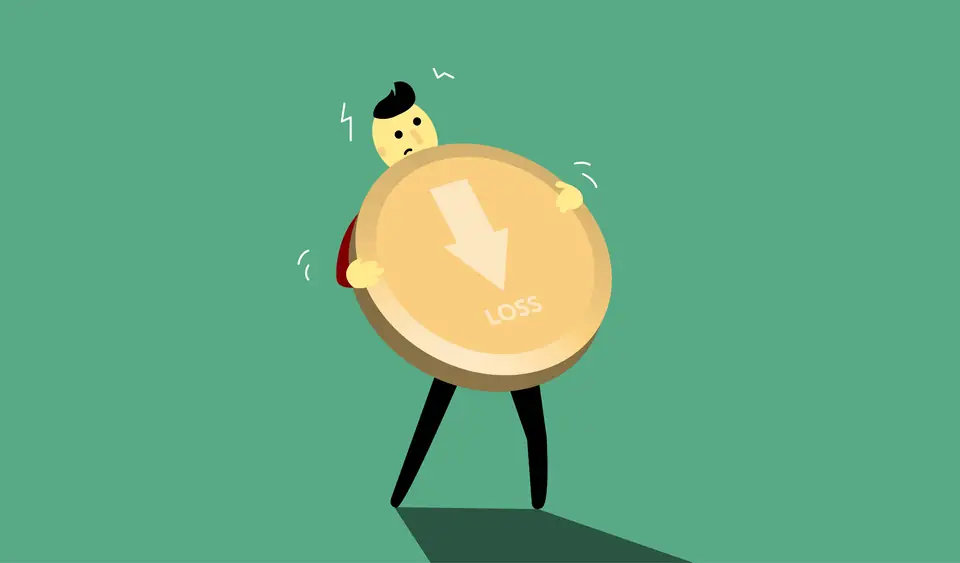
TerraUSD (UST) was, for a while, one of the largest stablecoins in the world. It had no reserve of dollars. Instead, the Terra system let anyone swap 1 UST for $1 worth of its sister token, LUNA, and the other way around. If UST traded below $1, traders could buy it cheaply, swap it for $1 of newly minted LUNA and pocket the difference, which in theory pulled UST back up.
The flaw was circular. The peg depended on LUNA having value, and LUNA's value depended largely on confidence in UST. When large holders started selling UST in May 2022, redemptions minted huge amounts of LUNA, LUNA's price collapsed, and the swap stopped being worth anything. Within days UST was far below a dollar and LUNA was close to zero. Savers who had been promised high yields on UST lost most of their money.
The shock spread to fully backed coins too. USDT briefly traded as low as about $0.94 on one major US exchange on 12 May 2022, and holders redeemed roughly $10 billion over the following weeks: USDT supply fell from about $83 billion to about $66 billion by the end of June. Tether paid those redemptions, and the price recovered, but 2022 remains the only year in which USDT's supply shrank.
How a fiat-backed stablecoin keeps its peg
For reserve-backed coins, the peg is held by a loop between the issuer and large traders:
- Minting. A verified institution sends dollars to the issuer and receives newly created tokens.
- Trading. Those tokens flow to exchanges and wallets, where ordinary users buy and sell them.
- Redemption. Verified institutions can send tokens back and receive dollars. For USDT, direct redemption has a minimum of $100,000 and a fee of the greater of $1,000 or 0.1%.
- Arbitrage. If the token trades at $0.99, an institution buys it and redeems it at $1. If it trades at $1.01, it mints new tokens and sells them. Both actions push the price back to $1.
Two consequences follow. First, small users never deal with the issuer directly; they rely on exchanges and market makers. Second, the peg is only as good as the redemption promise. If redemptions slow or stop, nothing anchors the price.
The stablecoin market today
Dollar stablecoins totalled about $293 billion in late 2026, according to DefiLlama, down from a peak of about $315 billion in May 2026 but far above the roughly $130–140 billion of early 2023 and 2024. The chart below shows the live market shares.
Stablecoin market share
LiveThe market is highly concentrated. After USDT and USDC, no single stablecoin held more than about 2% of the total at the time of writing: USDS, USDe, DAI, USD1, PYUSD, USDG and RLUSD each sat in the low single-digit billions. For a quick read on how much of the whole crypto market sits in USDT, see USDT dominance.
What can go wrong: five stablecoin risks

- Backing risk. Reserves might be smaller, riskier or less liquid than claimed. In 2021 the US CFTC found that USDT had been fully backed by fiat on only about 28% of days in a 2016–2018 sample. Reporting has improved since then, but you still rely on the issuer's disclosures.
- Bank and custody risk. Even good reserves sit somewhere. In March 2023 USDC fell below $1 when about $3.3 billion of its reserves were stuck at the failed Silicon Valley Bank. It recovered within days once the deposits were made safe.
- Freeze risk. Fiat-backed issuers can blacklist addresses. Tether says it has helped freeze more than $4.9 billion linked to crime. That protects victims, but it means your tokens can be frozen if they pass through a flagged address.
- Design risk. Algorithmic and synthetic models can fail in ways reserve-backed coins don't, as Terra showed.
- Regulatory risk. A stablecoin legal in one country may be restricted in another, and rules are changing quickly across Asia and the West.
Our is USDT safe? guide applies these risks to USDT specifically and shows how to reduce them.
Ready to hold digital dollars?
Buy USDT with a card or bank transfer on an established exchange with identity checks, then withdraw it to your own wallet on the network you need.
Operating since 2013 and registered with FinCEN (US) and the FCA (UK); readers in Asia are served by its international entity. Check availability and local rules in your country.
How regulators are treating stablecoins
Regulation used to lag far behind the market. That is changing fast, and it is reshaping which stablecoins are available where.
- United States. The GENIUS Act, signed in July 2025, creates a licensing regime for "payment stablecoins". It takes effect by early 2027 at the latest, and three years after enactment US platforms may only offer stablecoins from permitted issuers. Tether launched a separate US-regulated token, USAT, for that market.
- European Union. Under MiCA, USDT is not an authorised e-money token. The EU securities regulator ESMA told crypto platforms to restrict non-compliant stablecoins to sell-only by the end of March 2025.
- Hong Kong. The Stablecoins Ordinance took effect on 1 August 2025. The HKMA granted the first two issuer licences in April 2026, and stablecoins from unlicensed issuers, including USDT, may only be offered to professional investors.
- Japan. Stablecoins are regulated as "electronic payment instruments". Only two firms were registered to deal in them in 2026, handling USDC and a few other coins; USDT is not available on registered Japanese platforms.
- Elsewhere in Asia. Taiwan's new Virtual Asset Service Act requires central bank consent for local stablecoin issuance. Indonesia's financial regulator expects to publish stablecoin rules around January 2027, and Korea's stablecoin bill is still pending. Thailand, by contrast, added USDT and USDC to its list of approved cryptocurrencies in March 2025.
The country-by-country detail is in USDT in Asia.
Local-currency stablecoins in Asia
Not every stablecoin is a dollar. Several Asian markets now have, or are building, tokens pegged to their own currency:
- Philippines: PHPC, a peso stablecoin from Coins.ph, exited the central bank's sandbox in June 2025 and is backed 1:1 by cash and equivalents in Philippine banks.
- Japan: JPYC launched in October 2025 under Japan's funds-transfer rules, and SBI's yen stablecoin JPYSC followed in June 2026.
- Hong Kong: the first licensed issuers, Anchorpoint and HSBC, are preparing Hong Kong dollar stablecoins; Anchorpoint opened a beta to professional investors in August 2026.
- Malaysia: Bank Negara is piloting a ringgit stablecoin for business settlement with Standard Chartered and Capital A.
- Indonesia: a rupiah stablecoin project, IDRP, passed the regulator's sandbox in June 2026, though rupiah stablecoins remain tiny.
For most people these local tokens solve a different problem from USDT. They make domestic payments programmable; they don't give you dollar exposure.
How to judge any stablecoin before you hold it
Before you trust a stablecoin with real money, run through five questions:
- What backs it, and who says so? Look for regular reserve reports from a named accounting firm, and note whether they are attestations (a snapshot) or full audits.
- Can it actually be redeemed? Who can redeem, at what minimum and fee, and has the issuer honoured large redemptions under stress?
- How has it behaved in a crisis? Check its price during May 2022, November 2022 and March 2023.
- Is it liquid where you live? A coin that only trades on one platform is hard to exit. In Asia, USDT has by far the deepest P2P and exchange liquidity.
- Is it legal and available on licensed platforms in your country?
If you've decided USDT fits your needs, our guides to choosing a network and buying USDT safely are the next step. Unfamiliar terms are defined in the USDT glossary.